
Caravan Warranty Safe Repairs

A water heater that will not fire up on the evening before a trip, a soft patch by a window, or a fridge that suddenly stops cooling can make any caravan owner want the quickest possible fix. But when your van is still covered, the right decision is not simply about speed. This guide to caravan warranty safe repairs explains how to get faults dealt with properly while protecting your warranty, your safety and the long-term value of your caravan.
Warranty conditions vary between manufacturers, dealers and component suppliers, so there is no single rule for every repair. The sensible approach is to understand what your paperwork requires, use a suitably qualified repairer and keep a clear record of what has been found and done.
Before authorising work, find the caravan warranty booklet, service record and any separate warranties for appliances, batteries, movers or accessories. A new caravan may have different cover periods for the body shell, water ingress, fixtures and fittings. An appliance such as a fridge or heating system may also be covered by its own manufacturer warranty.
Look for the servicing schedule first. Many warranties require an annual habitation service and, where applicable, a chassis or running-gear service completed within a stated time window. Missing that window can put future claims at risk, even if the fault seems unrelated. Make a note of the due date rather than relying on a reminder arriving in the post.
Then check the wording around repairs and authorisation. Some warranty providers ask for approval before chargeable diagnostic work or replacement parts are fitted. Others allow an independent specialist to investigate and repair the issue, provided the workshop is appropriately qualified and invoices are retained. If the terms are unclear, contact the warranty provider or supplying dealer and ask them to confirm the process in writing.
A warranty-safe repair is one that follows the manufacturer’s requirements, uses suitable parts and leaves an auditable trail. It is not necessarily a repair carried out only by the selling dealer. What matters is whether the work meets the conditions of the warranty and the relevant safety standards.
For caravan owners, the repairer should be able to identify the fault rather than guess at it. A damp issue, for example, may be caused by failed sealant, a damaged roof light, an external trim or a plumbing leak. Covering a stained panel without tracing the water path can turn a manageable repair into a much larger job and may complicate a future warranty claim.
The same applies to electrical and gas faults. Replacing a fuse may restore power temporarily, but the cause of the blown fuse still needs checking. A gas appliance that will not light could have a simple supply issue, but it could also need specialist testing. Safety-critical systems should never be treated as a trial-and-error DIY project.
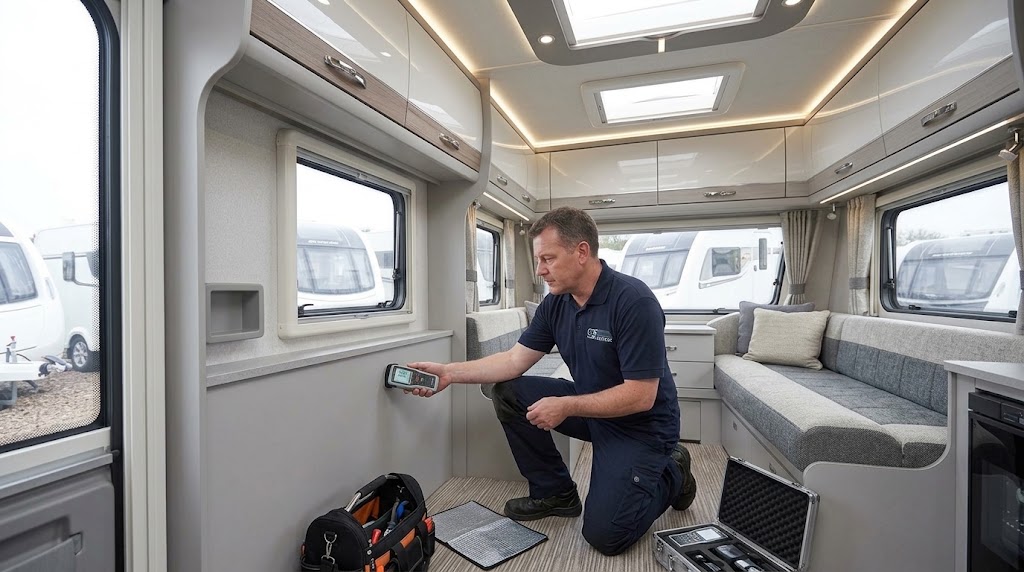
Choose a workshop with experience of touring caravans and the specific system involved. Gas equipment, 230V electrical installations, brakes, towing gear and structural water ingress all need different knowledge and procedures. Ask whether the technician can provide an itemised invoice, a report of the fault and any test results relevant to the work.
For routine servicing and many repairs, an Approved Workshop can provide the standards-based workmanship that manufacturers and warranty companies expect. It is still wise to check your individual terms, particularly during the early years of a new-van warranty. A quick conversation before booking can prevent misunderstandings later.
At Tenby Caravan Services, the focus is on explaining the fault in plain terms, carrying out the necessary checks and giving owners a clear record of the work. That approach is particularly helpful when you need to speak to a dealer or warranty provider afterwards.
Accessories can make a caravan far more comfortable, from motor movers and solar panels to extra sockets, alarms and heating improvements. They can also affect wiring, payload, roof structure or existing equipment if they are poorly specified or fitted.
An upgrade does not automatically invalidate a warranty. However, if a later fault can be linked to an unsuitable installation, damaged wiring or an overloaded circuit, the related claim may be questioned. Discuss the proposed fitting with a specialist first, use components suited to leisure vehicles and retain the fitting paperwork. If the caravan is still new, it can also be worth checking whether the manufacturer has any stated requirements for roof-mounted or electrical accessories.
When something goes wrong, take a calm, practical approach. Photograph visible damage, warning lights, damp staining or error codes before anything is dismantled. Note when the fault started, what conditions were present and whether it is intermittent. For example, a water pump that runs on after all taps are closed may point to a leak or a pressure issue, and that detail helps the technician diagnose it efficiently.
Avoid stripping out panels, applying sealant or replacing parts before advice has been taken, especially if water ingress is suspected. Well-meant work can hide evidence of the original problem. It can also make it harder to establish whether the fault falls within warranty cover.
Next, report the issue according to your warranty provider’s process. Be factual: explain the symptom, provide the caravan details and ask whether pre-authorisation is needed. Do not assume that a verbal conversation settles the matter. Keep emails, claim references and the name of the person you spoke to.
Once approval is clear, arrange an inspection with a suitable repairer. In Pembrokeshire, Carmarthenshire and Cardiganshire, a mobile workshop can be particularly useful where towing a caravan with a safety concern is not sensible. For some jobs, however, a workshop visit may be the better option because it allows more extensive testing, drying work or access to specialist equipment. The best choice depends on the fault, not simply what is most convenient.
Good paperwork is one of the simplest ways to safeguard your position. Keep service sheets, damp reports, invoices, parts details, photographs and any warranty approval with the caravan’s documents. Digital copies are useful, but a printed folder kept with the handbook is handy when selling the van or dealing with a claim while away.
An invoice should show the caravan registration or VIN where possible, the date, the work completed and the parts supplied. If the job involved a gas appliance, electrical system or damp repair, ask for the relevant inspection or test information. This is not just administration. It demonstrates that the caravan has been looked after responsibly, which supports both warranty discussions and resale value.
Be wary of cash-only repairs with no paperwork, even if the price looks tempting. You may have little evidence of what was done, whether appropriate parts were used or who is responsible if the fault returns. A proper repair can cost more upfront, but it usually offers better value than paying twice for an uncertain fix.
Some issues are inconvenient; others should stop a trip until they have been checked. Do not tow or continue using the caravan if you notice brake problems, wheel bearing noise, tyre damage, a gas smell, signs of overheating, damaged electrical cables, serious water ingress or a loose towing component.
If you smell gas, turn off the supply at the cylinder if it is safe to do so, avoid flames and electrical switches, ventilate the area and arrange professional assistance. If 230V electrics are involved, isolate the supply rather than repeatedly resetting a tripped breaker. These measures do not repair the fault, but they can prevent a small issue becoming a dangerous one.
Damp also deserves prompt attention. A minor mark around a locker or roof light can be the first visible sign of a leak that has been developing out of sight. Early investigation gives the best chance of limiting timber damage, preserving the caravan’s condition and maintaining a strong service history.
Not every fault is covered. Wear-and-tear items, accidental damage, lack of maintenance and faults caused by unauthorised alterations are commonly excluded. A warranty provider may also decide that a repair is not covered after inspection. That can be frustrating, but a written diagnostic report gives you a sound basis for deciding whether to proceed privately.
If you are paying for the work yourself, do not let that lower the standard you expect. Ask what caused the problem, what repair is proposed and whether there are options. Sometimes a direct replacement is sensible; sometimes repairing a localised fault is more economical. A good technician will explain the trade-off honestly, including where a cheaper repair may only be temporary.
A caravan is there for weekends away, family visits and unhurried holidays, not for worrying over hidden faults. Give repairs the same care you give your route planning: ask questions early, keep the evidence and choose workmanship you can trust. That leaves you free to hitch up with greater confidence when the next break comes around.

Why is it important to keep your leisure battery in tip top condition and how can we check the condition for you?

Preparing Your Caravan for Winter Storage: Essential Tips for a Stress - Free Period between Autumn & Spring