
Caravan Damp Check Pembrokeshire
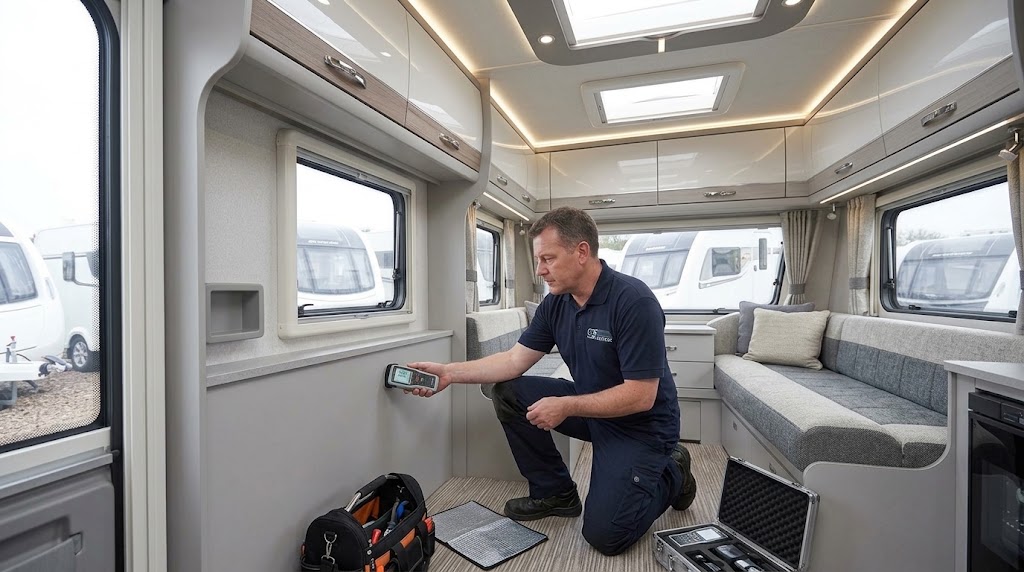
A soft wall by the window, a musty smell that was not there last season, or staining in a roof locker - that is often how caravan damp starts to make itself known. If you are looking for caravan damp repair West Wales owners can trust, it usually means you want answers quickly, before a small issue turns into a major rebuild.
Damp in a caravan is rarely just a cosmetic problem. Water can travel behind wallboards, into timber framing, around roof joints and through floor edges long before the damage is obvious from inside. By the time a patch feels spongy or wallpaper starts to ripple, there may already be more going on beneath the surface.
That is why proper diagnosis matters. A good repair is not simply a case of drying things out and resealing the nearest joint. The real job is finding where water is getting in, checking how far it has spread, removing damaged materials where needed, and then rebuilding the area to a safe, sound standard.
West Wales is a brilliant place to tour, but it is not gentle on caravans. We get coastal air, regular rain, strong winds and long periods of moisture in the atmosphere. Over time, all of that puts pressure on seals, trims, rooflights, window surrounds and service hatches.
A caravan does not usually leak because one dramatic thing failed overnight. More often, damp develops slowly. Sealants age, body movement opens tiny gaps, screws loosen, and previous repairs may not hold up as well as expected. Even storage conditions can play a part. If a van sits for long periods without regular inspection, small water ingress issues can go unnoticed.
Age is another factor, but newer caravans are not immune. Construction methods vary between makes and models, and some areas are more vulnerable than others. Front and rear panel joints, awning rails, roof seams, grab handles, corner steadies and window frames are common trouble spots.
Some owners spot damp early. Others only realise there is an issue during annual servicing or when a meter reading flags something up. Both happen, and neither means you have done anything wrong. What matters is acting before the damage spreads further.
The most common warning signs are a musty smell, discolouration, bubbling wallboard, soft spots around windows or rooflights, lifting vinyl, and black marks in corners or lockers. In some cases, cupboard backs or under-seat areas show the first clues because they stay closed and trap moisture.
It is worth saying that condensation and damp are not the same thing, though they can overlap. Condensation tends to be surface moisture caused by poor ventilation, colder weather or everyday living inside the van. Damp ingress comes from water entering through the structure. One can encourage the other, but the repair approach is very different.
When people hear the word repair, they often think first about resealing. Sometimes resealing is part of the answer, but on its own it is not a full damp repair if the water has already damaged internal materials.
A proper job starts with inspection. Moisture readings help build a picture, but they are only one part of it. An experienced technician also looks at panel joints, trim lines, external fittings and the likely water path. Water does not always show up exactly where it entered, which is why guesswork can waste time and money.
Once the source is identified, the extent of the damage needs to be checked. In mild cases, the issue may be caught early enough that localised repairs are possible. In more serious cases, affected wallboard, timber or floor sections may need removing and replacing. The best route depends on the age of the caravan, the construction method, the severity of the ingress and, of course, whether the repair remains sensible in relation to the van's value.
After that comes the rebuild. This is the part many owners never see, but it is where standards matter most. Damaged areas need to be stripped back properly, dried where appropriate, rebuilt with suitable materials, and then resealed carefully. The finish should look tidy, but more importantly it should be structurally sound and watertight.
There are owners who are capable with tools, and for small cosmetic jobs that confidence can be useful. Damp repair is different. The difficult part is often not the visible damage, but tracing the water path and knowing how the caravan is built behind the wallboard.
A tube of sealant from a shop can make matters worse if it is applied over old failed sealant, used in the wrong area or added before the leak path is fully understood. It may mask the problem for a while, but trapped moisture can continue damaging the structure underneath.
There is also the question of safety and value. If damp affects structural strength, fittings, electrical areas or floor integrity, a patch repair is not enough. Poor repair work can reduce resale value and lead to a much larger bill later on.
For many owners, the sensible middle ground is simple - get the caravan professionally assessed first, then decide. Even if the repair turns out to be minor, you know where you stand.
With caravan damp repair West Wales customers are often looking for more than a quick fix. They want to know the work has been done properly and that someone has taken the time to explain what was found.
That is where an approved workshop standard makes a real difference. It means work is carried out by qualified technicians within recognised service and repair processes. For owners, that brings reassurance, especially where warranty considerations, resale value and long-term reliability matter.
A good workshop will talk plainly. You should expect honest advice about the cause of the damp, the likely repair scope, and whether the job is straightforward or more involved. Sometimes the answer is encouraging. Sometimes it is a bit more sobering. Either way, clear guidance helps you make a sound decision.
At Tenby Caravan Services, that practical, local approach matters just as much as the technical side. People want to bring their caravan somewhere they can ask questions, have a proper conversation, and feel they are being looked after rather than pushed through a process.
There is no single price for caravan damp repair because no two cases are exactly the same. A small ingress issue around a fitting is very different from widespread damage in a front panel or rear corner.
Cost usually depends on how long the leak has been present, how easy the affected area is to access, whether timber or floor structure needs replacing, and how much interior finish work is required afterwards. Parts availability can also affect timescales, especially on older models.
This is one of those areas where it really does depend. Two caravans can show similar staining inside, yet one may need a modest local repair while the other requires a much bigger strip-out once the wall is opened up. That is why an inspection is always the right first step.
Once a caravan has been repaired, owners naturally want to avoid a repeat. The most effective protection is regular servicing with damp checks included. Early moisture readings can pick up a problem before it becomes visible, which gives you far more options and usually keeps repair costs down.
It also helps to keep an eye on seals, rooflights, windows and locker doors, especially after harsh weather or long storage periods. Good ventilation matters too, not because it stops water ingress, but because it reduces background moisture that can make conditions worse inside the van.
If you notice a smell, staining or any softness in the walls or floor, do not leave it until the next trip. Damp rarely improves on its own. The earlier it is assessed, the more chance there is of a contained and cost-effective repair.
The best time to book is as soon as you suspect a problem, not once the season is in full swing and the damage has had another few months to spread. Many owners prefer to have checks done before spring touring begins or as part of end-of-season maintenance, but urgent signs should not wait.
Even if you are not certain it is damp, it is worth having it looked at. A proper inspection can either confirm the issue or give you peace of mind that the caravan is sound. That alone can be worth it before a long holiday or if you are planning to sell.
A caravan is there to give you freedom, comfort and confidence on the road. If something feels off, trust that instinct and get it checked. A friendly workshop conversation now is usually much easier than dealing with a much bigger repair later.


Why is it important to keep your leisure battery in tip top condition and how can we check the condition for you?

Preparing Your Caravan for Winter Storage: Essential Tips for a Stress - Free Period between Autumn & Spring